Queer Places:
Clifton College, 32 College Rd, Clifton, Bristol BS8 3JH, United Kingdom
University of Cambridge, 4 Mill Ln, Cambridge CB2 1RZ
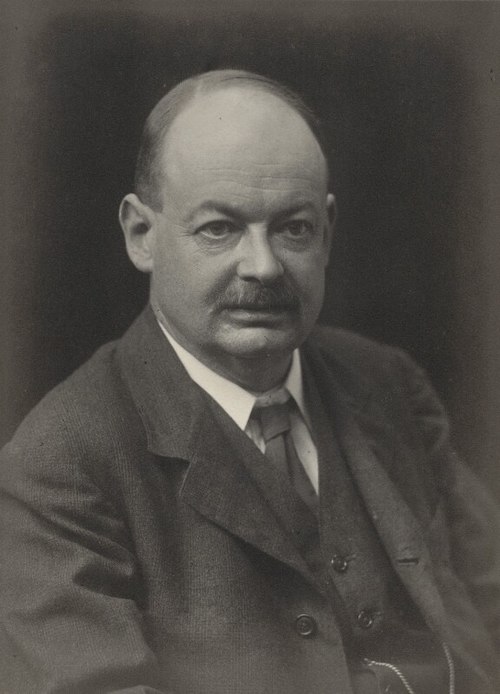 John McTaggart Ellis McTaggart (September 3, 1866 - January 18, 1925) was born on September 3, 1866, in London, as the second and eldest surviving son of
Caroline Ellis and Francis Ellis, a county court judge. Originally named John McTaggart Ellis, his family later adopted the surname McTaggart as a
condition of inheriting wealth from his great-uncle, Sir John McTaggart. He received his early education at Clifton College in Bristol before entering
Trinity College, Cambridge, in 1885. At Cambridge, he distinguished himself academically under the guidance of prominent philosophers like
Henry Sidgwick and James Ward, ultimately graduating with First Class
honours in the Moral Sciences Tripos in 1888. His brilliant student career was decorated with achievements, including the Members' Prize, the Marshall
Prize, and election as President of the Cambridge Union Society in 1890.
John McTaggart Ellis McTaggart (September 3, 1866 - January 18, 1925) was born on September 3, 1866, in London, as the second and eldest surviving son of
Caroline Ellis and Francis Ellis, a county court judge. Originally named John McTaggart Ellis, his family later adopted the surname McTaggart as a
condition of inheriting wealth from his great-uncle, Sir John McTaggart. He received his early education at Clifton College in Bristol before entering
Trinity College, Cambridge, in 1885. At Cambridge, he distinguished himself academically under the guidance of prominent philosophers like
Henry Sidgwick and James Ward, ultimately graduating with First Class
honours in the Moral Sciences Tripos in 1888. His brilliant student career was decorated with achievements, including the Members' Prize, the Marshall
Prize, and election as President of the Cambridge Union Society in 1890.
Building on his academic success, McTaggart was elected to a prize fellowship at Trinity College in 1891 based on a dissertation on Hegel's Logic. He
subsequently served as a college lecturer in Moral Sciences and Philosophy from 1897 until his formal retirement in 1923, though he continued lecturing
until the end of his life. Deeply embedded in elite intellectual circles, he was elected a Fellow of the British Academy in 1906 and received an honorary
Doctor of Letters from St Andrews in 1911. Intellectually, he became a major exponent of Georg Wilhelm Friedrich Hegel's philosophy and a leading figure
among British idealists. He published several influential texts, including Studies in the Hegelian Dialectic, A Commentary on Hegel's Logic, Some Dogmas of
Religion, and his magnum opus, The Nature of Existence. He is most globally renowned for his 1908 paper "The Unreality of Time," which established the
A-series versus B-series conceptual framework and introduced the philosophical conundrum known as McTaggart's Paradox.
Beyond pure metaphysics, McTaggart maintained distinct personal quirks and socio-political positions. Although a lifelong atheist, he was an
enthusiastic supporter of the Church of England from an Erastian Whig perspective, driven by a deep reverence for long-standing institutional traditions.
In national politics, he was a Free-Trade Unionist, while in university politics, he was a progressive feminist and a strong advocate for women's
suffrage. In 1899, he married Margaret Bird, daughter of Joseph Bird of Auckland, New Zealand. He passed away in London on January 18, 1925, leaving
behind a legacy immortalized not only by his revolutionary philosophy of time but also by a portrait painted by his close friend
Roger Fry, which hangs in his former lecture room at Trinity College.
McTaggart's connections to LGBTQ history and queer culture are primarily anchored through his lifelong integration into elite, homoerocially and
intellectually permissive Cambridge networks, most notably the Cambridge Apostles (the secretive
Cambridge Conversazione Society). Membership in the Apostles during the late 19th and early 20th centuries placed McTaggart at the heart of an
intellectual fraternity famous for breaking Victorian social constraints. The society provided a safe, clandestine harbor for men to engage in
uninhibited philosophical discourse, frank discussions of homoeroticism, and the exploration of intense homosocial bonds and Platonic love as a
deliberate counter-discourse to rigid heteronormative Victorian ideology. Though McTaggart himself married later in life, his decades-long immersion in
the close-knit, homosocial inner sanctum of the Apostles and the broader Cambridge philosophical establishment aligned him with the foundational
institutional subcultures that later directly birthed the Bloomsbury Group and shaped modern queer intellectual history.
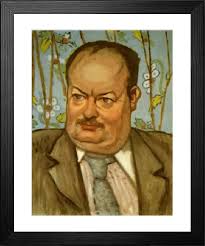
by Roger Fry, c. 1920
References:
Other references:
- Broad, C. D. (1927). "John McTaggart Ellis McTaggart, 1866–1925." Proceedings of the British Academy, Vol. 13, pp. 307–334. (An authoritative biographical and critical sketch written by his fellow philosopher, later expanded into his two-volume An Examination of McTaggart's Philosophy).
- Dickinson, G. Lowes (1931). J. M. E. McTaggart. Cambridge: Cambridge University Press. (The definitive early biography compiled by his close friend, featuring supplemental chapters by Basil Williams and S. V. Keeling, drawing heavily on materials collected by Nathaniel Wedd).
- Moore, G. E. (1925). "Death of Dr. McTaggart." Mind, Vol. 34, pp. 269–271.
- McTaggart, J. M. E. (1896). Studies in the Hegelian Dialectic. Cambridge: Cambridge University Press.
- McTaggart, J. M. E. (1901). Studies in Hegelian Cosmology. Cambridge: Cambridge University Press.
- McTaggart, J. M. E. (1906). Some Dogmas of Religion. London: Edward Arnold.
- McTaggart, J. M. E. (1908). "The Unreality of Time." Mind, Vol. 17, No. 68, pp. 457–474. (The landmark paper establishing the A-series vs. B-series framework).
- McTaggart, J. M. E. (1910). A Commentary on Hegel's Logic. Cambridge: Cambridge University Press.
- McTaggart, J. M. E. (1921–1927). The Nature of Existence (2 Volumes; Vol. 2 edited posthumously by C. D. Broad). Cambridge: Cambridge University Press.
- Oxford Dictionary of National Biography (ODNB): Broad, C. D. (revised by C. A. Creffield). "McTaggart, John McTaggart Ellis (1866–1925)."
- Stanford Encyclopedia of Philosophy (SEP): John M.E. McTaggart.
- Internet Encyclopedia of Philosophy (IEP): J. M. E. McTaggart.
- Routledge Encyclopedia of Philosophy: Baldwin, Thomas (1998). McTaggart, John McTaggart Ellis (1866–1925).
- Geach, Peter (1979). Truth, Love and Immortality: An Introduction to McTaggart's Philosophy. London: Hutchinson.
- Ingthorsson, R. D. (2016). McTaggart's Paradox. New York: Routledge.
- Mander, W. J. (2011). British Idealism: A History. Oxford University Press.
- Cambridge University Library (CUL): Holds extensive correspondence with G. E. Moore, Nathaniel Wedd, and Hilton Young, alongside student lecture notes.
- Churchill Archives Centre, Cambridge: Holds correspondence with Oscar Browning and Roger Fry.
- Bodleian Library, Oxford: Contains letters to G. G. A. Murray and Hastings Rashdall.
Support this project
This website is a passion project researched, developed, and funded entirely by me. If you find the content valuable and would like to help support the ongoing research and hosting costs, any contribution is deeply appreciated.
Thank you for keeping this independent resource alive!
My books on Amazon: Elisa Rolle's books
BACK TO HOME PAGE
